
More and more radiology networks are turning to remote scanning, in which experienced radiographers operate scanners at other sites from a distance. Yet the success of this model does not depend on technology alone. Patient coordination plays a central role: a relatively new function that forms the link between the patient and the remote radiographer.

Maxi Wetzel
Clinical Workflow Specialist · Starvision Service GmbH
Since April 2022, she has been managing projects involving large imaging systems: process and workflow analyses, new working and operating models, and the implementation of remote scanning.
Remote scanning is now part of our everyday work. We have been running this model at several of our practice sites for a number of years, with all the opportunities and some of the challenges that come with it. Patient coordinators, often also called scan assistants or local operators, play a central role in this. What started out as a completely new role has now become an established part of our radiology team. In this article, I would like to show how we set up this role, trained people for it and integrated it into routine practice, and what we learned along the way.
Content
1. Patient Coordination in Routine Practice: Why?
2. Laying the Groundwork
2.1 The Basics
2.2 Standardisation
2.3 Training and Onboarding
2.4 Workplace and Technology
2.5 General and Site-Specific Topics
2.6 Practical Onboarding Period
2.7 SOPs for Patient Coordinators
2.8 Patient Positioning
2.9 Division of Tasks and Workflow
3. Into Routine: How We Went About It
3.1 Preparation
3.2 Onboarding
3.3 Training Patient Coordinators
3.4 Routine Use and Further Development
3.5 Regular Training
4. Conclusion
1. Patient Coordination in Routine Practice: Why?
The role of patient coordinators has noticeably changed day-to-day work in radiology. And it has done so in a way that everyone involved can feel: the team, the patients and, ultimately, the entire practice organisation.
A clear division of tasks gives everyone more time for what should be at the centre of attention: the patient and their individual needs. Preparation, patient support and organisational processes can be handled in a more structured and personal way, without these tasks having to be managed alongside running the scanner. The rush between changing room and scanner gives way to a calmer, clearer workflow.
At the same time, this division of roles lays the foundation for high-quality examinations. While patient coordination focuses on preparation, patient care and process management, radiographers can concentrate fully on their core task: performing the examination safely and to a high standard. This brings more calm at the scanner, more stable processes and higher process quality, particularly in complex or multi-site care settings such as remote scanning.
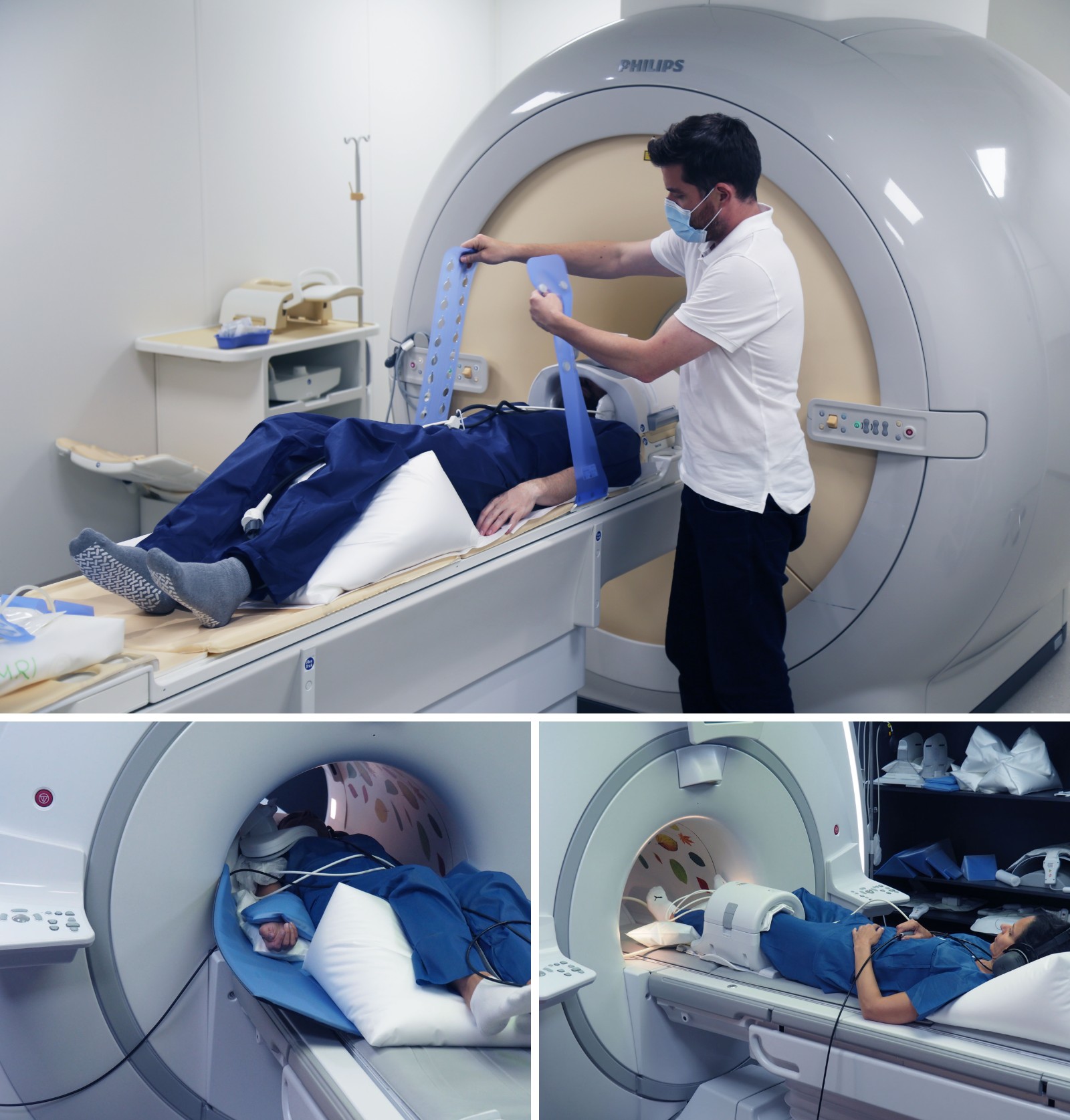
Figure 1: Patient positioning in MRI: preparation for a head MRI with MULTIPAD, PearlFit and ProBelt (top) and positioning for shoulder and knee MRI (bottom).
2. Laying the Groundwork
2.1 The Basics
Introducing remote scanning does not start with the technology, but with a few fundamental questions: Which sites and scanners are suitable for remote operation in the first place? Which range of examinations can sensibly be covered there? Not every examination is equally suitable. Complex, time-critical or highly dynamic examinations in particular, such as certain cardiac MRI examinations, often require a high level of experience and direct interaction at the scanner. This needs to be assessed honestly at an early stage.
At the same time, the introduction is a real opportunity to take a critical look at existing processes. Which workflows already work well? Where do unnecessary interruptions, duplicated work or breaks between systems occur? It pays to make these improvements straight away rather than painstakingly catching up on them later. If you are rethinking everything anyway, you may as well remove old weak points at the same time.
A clear project organisation is just as important. Responsibilities need to be defined early: Who is in charge of the technology, who handles training and who keeps track of the big picture? And even after implementation, there need to be dedicated contacts both on site and across sites who continuously develop the topic, ensure quality and act as the first point of contact for questions. Remote scanning is not a one-off introduction. It is a model of care that needs active support and ongoing development.
2.2 Standardisation
Consistent standardisation is a key success factor for remote scanning and, at the same time, one of the greatest opportunities to improve processes for the long term. At first, the word "standard" is often associated with restriction or rigidity. In practice, however, the exact opposite turns out to be true: standardisation creates reliable structures, reduces complexity and takes pressure off staff in their daily work.
Clear standards become all the more important in a working model where teams no longer always sit side by side, but work together across sites and partly remotely. When workflows, responsibilities and procedures are defined consistently, this creates confidence, regardless of which site someone is working at or who happens to be on duty.
This is not only about harmonising examination protocols, but about the entire process surrounding the examination. Positioning aids, emergency equipment, patient pathways and the handling of unexpected situations should all be organised in the same way wherever possible. As a result, anyone who works at different sites or rotates between them finds their way around more quickly. Communication becomes easier, less coordination is needed and onboarding is considerably simpler.
This is precisely where an often underestimated advantage lies: anything that is organised more simply and clearly takes pressure off the team. Staff need to improvise less, fewer questions come up and decisions can be made more quickly. At the same time, process quality improves because proven workflows become reproducible.
SOPs (standard operating procedures) tailored specifically to patient coordinators are particularly important here. They should be deliberately compact, practical and easy to understand, serving as a quick point of reference for everyday work. The aim is not an extensive procedural instruction, but an easy-to-use reference: What needs to be done, and when? What needs to be considered? Who should be contacted if problems arise? This allows even staff without a clinical background to understand at any time how to proceed correctly.
In addition, an FAQ or reference guide covering frequent questions and technical challenges has proved its worth. This kind of knowledge base reduces queries and creates confidence in everyday work.
2.3 Training and Onboarding
A new role such as patient coordination calls for a clearly structured training and onboarding concept. The aim is to prepare staff for their tasks in a targeted and practical way, from preparing patients through to communicating with the radiology team.
It starts with the question: What does the new role actually need to know and be able to do? To cover these requirements systematically, a modular training programme has proved effective. The content is divided into clearly defined learning units that build on each other step by step. This keeps the learning objectives transparent and allows new staff to grow into their role efficiently and with confidence.
Patient coordinators need a basic understanding of radiological workflows, even if they are not directly involved in imaging. Training on the differences between CT and MRI, relevant contraindications and patient safety enables coordinators to answer patients' questions competently and avoid uncertainty. This strengthens not only patients' trust, but also the self-confidence of the staff.
Naturally, the most important training focus is MRI safety. This is not just about theoretical knowledge, but also about practical confidence. Safety rules need to be refreshed regularly, not only at the start, but as an ongoing part of further training.
Alongside technical safety, communication plays a central role. Patient coordinators are in direct contact with patients and therefore need good conversational skills, empathy and the ability to express themselves clearly. As many of these staff members do not originally come from a radiology background, it is important to prepare them specifically for dealing with patients, especially in challenging situations.
2.4 Workplace and Technology
A functioning remote scanning model stands or falls with confident use of the technology and a clearly structured workplace. For the interplay between the remote radiographer and the patient coordinator to work, both sides need to know exactly which tools and systems they use and how to use them.
Onboarding therefore includes structured instruction in all the technologies used: from communication and telephone systems and chat functions through to RIS and PACS. Staff need to know which system is used when, how information is handed over and which channel is used to communicate in which situation. This is crucial in a remote setting in particular, because quick, informal coordination is possible far less often.
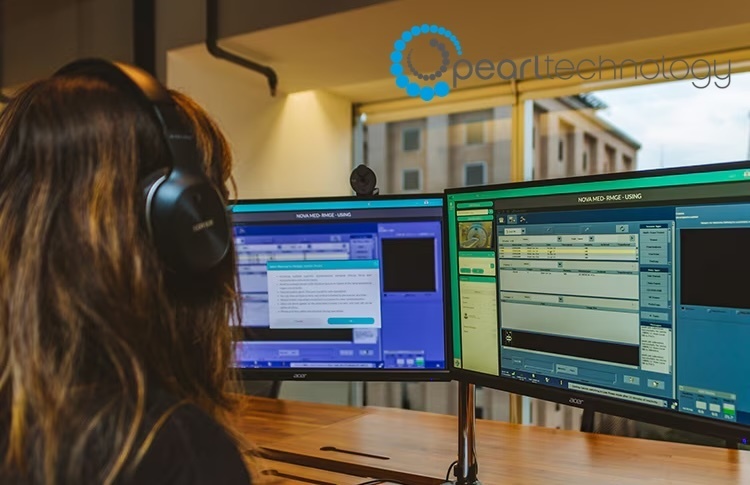
Figure 2: Remote scanning workstation with several screens and a headset.
A clearly defined workflow at the workplace is just as important. Clear procedures and fixed routines help to create confidence, especially in the initial phase. It should be clearly described who takes on which task and when, how handovers take place and what information needs to be available before the examination begins. Too much leeway can lead to uncertainty in everyday work, especially for new staff. Clear processes reduce this uncertainty, make collaboration between the patient coordinator and the remote radiographer easier and ensure consistently high quality.
And then there are exceptional situations. Technology can fail. What matters is not whether problems occur, but how professionally they are dealt with. Technical faults call for defined escalation routes, dedicated contacts and, above all, a clear plan B: What happens if the connection drops? How does work continue if individual systems are temporarily unavailable? Which examinations can be continued, and when does the issue need to be escalated?
Defined emergency chains are just as important. Staff need to know whom to contact in which situation, how responsibilities are assigned and which measures must be taken immediately. This confidence in dealing with technology, faults and unexpected situations is not an optional extra. It is an integral part of good onboarding and a basic requirement for stable remote operation.
2.5 General and Site-Specific Topics
In addition to the technical and organisational basics, there are a number of other topics that are relevant to the onboarding and day-to-day work of patient coordinators. These mainly concern practice- and site-specific requirements that go beyond the actual scanning.
Key topics here are data protection, hygiene requirements and the necessary instruction in medical devices. When handling sensitive health data and carrying out tasks in close contact with patients, a sound understanding of the relevant requirements is essential to work responsibly and in compliance with the rules. This also includes mandatory instruction in the medical devices used, in line with the applicable regulations. Staff need to know which aids and devices are used at the site, how to use them safely and what to look out for in daily operation. Topics such as emergency equipment, contrast agent processes or site-specific safety rules should also be part of onboarding.
In addition, the tasks may differ depending on the practice structure, the modality or the organisational model. Besides accompanying and preparing patients, they may include administrative tasks, materials management or organisational coordination, for example. This makes it all the more important to clearly define, before the introduction, which tasks are to be performed at which site, and to provide targeted training for them. Clear expectations create confidence, prevent misunderstandings and make teamwork easier.
2.6 Practical Onboarding Period
Theoretical training is followed by the decisive step: practical onboarding. This is the phase in which new knowledge turns into routine, so it should be planned with sufficient time and structure.
The length of the onboarding phase depends heavily on the individual's background. Some find their feet very quickly, internalise workflows intuitively and work independently after a short time. Others need more support to gain confidence in dealing with patients, equipment and workflows. These differences are completely normal. What matters is allowing enough room for individual learning.
During the onboarding period, all key work steps are practised hands-on: from preparing the examination and interacting with patients through to challenging situations. Training with realistic scenarios is particularly important, for example how to respond in an emergency or what to do if an incident occurs in a neighbouring modality (e.g. CT). Exercises like these build practical confidence and trust in one's own abilities.
Handling the equipment and the elements in the examination room is also an essential part of onboarding. Patient coordinators must be able to operate all controls confidently to ensure that every examination runs smoothly.
Patient positioning is another key part of the practical phase. Alongside the standard positions, alternative positioning options should also be trained for cases in which patients have special needs or restricted mobility. Knowing how to position patients flexibly and safely at the same time makes a significant contribution to comfort, image quality and patient safety.
2.7 SOPs for Patient Coordinators
Clear, practical documentation is an essential part of successful work in remote scanning, particularly in the form of standard operating procedures (SOPs). They play a central role for patient coordinators, as they serve as a reference and point of orientation in everyday work.
Unlike conventional SOPs, which are often very extensive and highly technical, SOPs for patient coordinators need to be deliberately short, clear and easy to understand. The aim is not to cover every detail of a radiological examination, but to present the most important steps as concisely as possible. This allows staff to look things up quickly when needed without having to work through pages of documents.
The focus is on the topics that matter in practice:
- Positioning and centring of patients
- Using the right coil for each examination
- Safety aspects, for example avoiding contact points in the gantry or positioning accessories correctly
Clearly structured instructions like these give confidence, especially to new colleagues and those without a radiology background. They always know how to proceed in specific situations and can complete tasks independently.
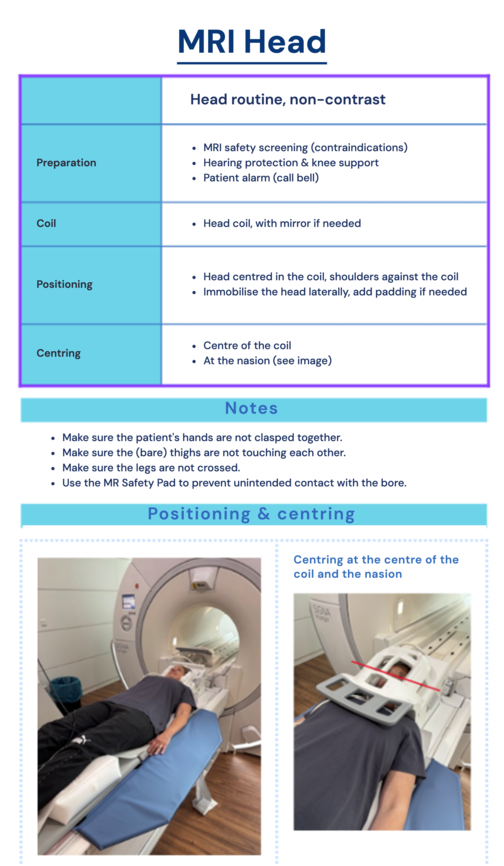
Figure 3: Example of an SOP for patient coordinators: head MRI (routine, non-contrast).
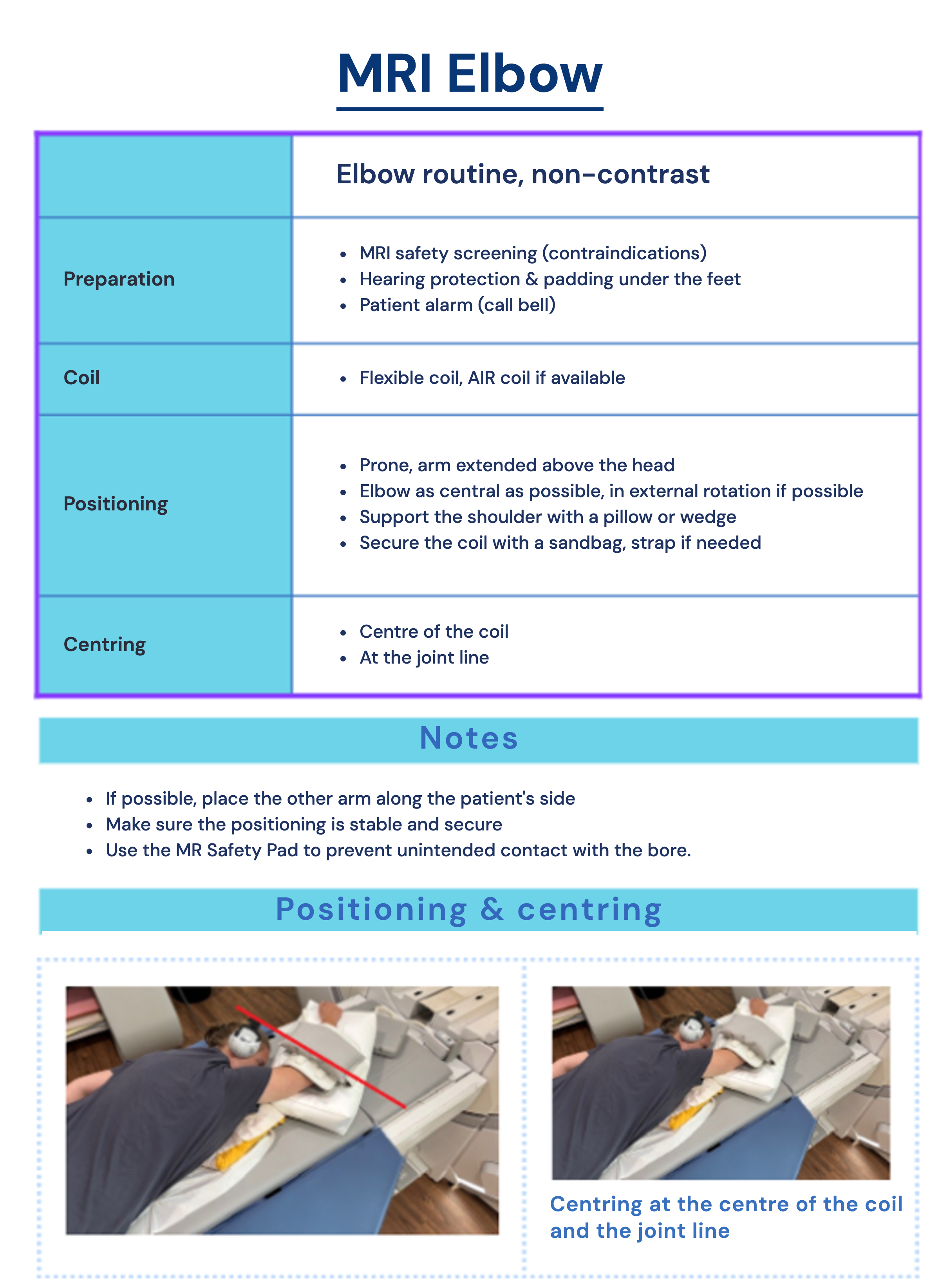
Figure 4: Example of an SOP for patient coordinators: elbow MRI (routine, non-contrast).
2.8 Patient Positioning
Precise, standardised positioning is the foundation of every high-quality MRI examination, both for image quality and for patient comfort. In a remote setting, this topic becomes even more important, as the radiographer often works at a different location and relies on correct preparation by the patient coordinator.
It therefore pays to define clear positioning standards. Every examination, whether lumbar spine, knee or shoulder, should be prepared according to a uniform scheme. Ideally, the required positions are documented with photos, including the positioning aids used. This way, all staff can see at any time what the standard looks like and what is expected.
This visual and written documentation promotes not only consistency, but also a sense of security within the team. Knowing that every examination follows the same principle allows people to work more efficiently and calmly.
Consistent positioning standards also build trust in remote communication. The radiographer working 20 kilometres away then knows exactly that the patient is always positioned the same way for a given examination, with the same positioning aids and the same landmarks. This allows them to perform the scan without uncertainty.
Standardised positioning also improves patient comfort and safety. A stable, reproducible position minimises movement and reduces the risk of contact points or poor posture.
One helpful aid in this context is the MR Safety Angel Pad from Pearl Technology. This positioning pad minimises contact points between the patient and the gantry, as its side wings automatically come to rest against the bore as soon as the table moves into the gantry. For less experienced staff, this means less uncertainty, less need for manual padding and more safety for patients.
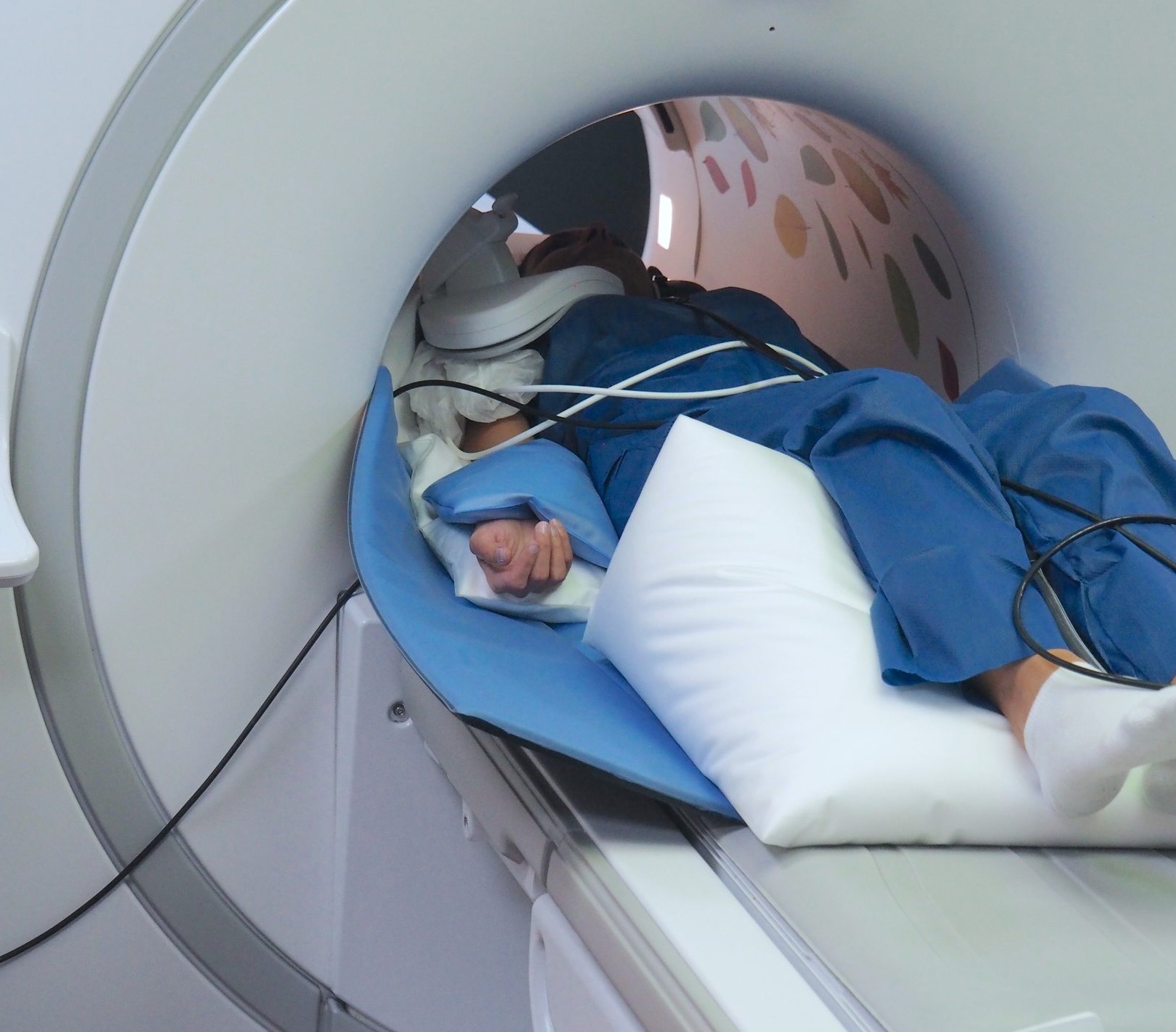
Figure 5: MR Safety Angel Pad in use: the side wing rests against the bore wall and prevents direct skin contact with the gantry.
2.9 Division of Tasks and Workflow
In practice, it has proved useful to first write down the work processes in detail: Who takes on which tasks, in what order, and at what point is the handover? This clarity creates transparency and prevents misunderstandings.
When the role of patient coordination is newly introduced, this workflow should be discussed together within the team. This way, everyone involved understands how the collaboration is intended to work and why certain divisions of tasks make sense. Open dialogue in this phase promotes not only understanding, but also acceptance of the new structure.
Interestingly, many teams report feeling considerably relieved after introducing this clear division of tasks. Although more examinations are carried out each day, stress levels fall. The reason: everyone knows exactly what they need to do, and there are hardly any questions left to ask. This saves time, brings calm to everyday work and lets everyone focus.
3. Into Routine: How We Went About It
Once the organisational foundations are in place, the next step is to transfer the remote scanning concept into routine practice step by step. This is the point that decides whether remote scanning works in everyday practice or stalls at the project stage.
3.1 Preparation
At Starvision, this process began without any external support. The team took the implementation into its own hands. The first important step was the timeline: a clear roadmap setting out when which tasks are due and who is responsible for what. This meant the project was managed in a structured and transparent way from the very beginning.
The kick-off meeting with all staff had a particularly strong impact. It served not only to inform, but above all to create transparency. It was openly explained why remote scanning was being introduced, what would change as a result and what would not. Many of the initial concerns ("Will I become redundant?", "Will I lose my responsibilities?") could be addressed in this way. After this exchange, the topic of job cuts was off the table. Instead, a real team spirit and a sense of a fresh start emerged.
It was also important to define roles and responsibilities very clearly. Who is the point of contact for technical questions? Who coordinates the training of patient coordinators? And who keeps track of the big picture? These structures helped to avoid uncertainty and ensured smooth collaboration between remote radiographers, physicians and patient coordinators from the outset.
3.2 Onboarding
When onboarding patient coordinators, it was important to us that the process be as structured as possible, yet practical for everyday work. We did not want an overloaded training programme that nobody could keep up with in practice, but a system that would allow new colleagues to grow into their role safely, step by step.
We therefore provided as much as possible in advance: training documents, learning modules and information material that could be worked through calmly at home. This had two advantages: on the one hand, new staff were able to prepare for the content individually; on the other, more time remained during practical onboarding for what really matters: working at the scanner and with patients.
Topics such as examination procedures, contraindications or the basics of radiology lend themselves perfectly to being taught in advance. In the practical phase, the aim is then to turn this knowledge into confidence in practice. This allowed us to shorten the learning curve considerably and increase motivation, because nobody felt they had been thrown in at the deep end.
We were also aware that patient coordinators' ties to their employer are often still weak at first. That is why we wanted to make onboarding attractive and compact: short, clear learning units with immediate practical relevance rather than lengthy blocks of theory. This approach has proved its worth. Our colleagues were engaged from the start and were quickly able to take on responsibility.
3.3 Training Patient Coordinators
After onboarding, the practical part begins, and for us it is always the most exciting. We trained the patient coordinators directly at the scanner, because that is where learning immediately becomes tangible. The initial focus was on MRI safety. This is the core area without which nothing works, and it needs to be refreshed regularly.
In our training sessions, however, we quickly realised that safety alone is not enough. Communication plays at least as big a role, with patients as well as with the team on site and the remote radiographers. That is why conducting conversations, dealing with difficult situations and knowing how to respond to unexpected events are a fixed part of the training programme.
3.4 Routine Use and Further Development
Training is followed by the step into routine, and this is where it becomes clear how well the concept holds up. We deliberately spread out the onboarding instead of packing everything into the first two weeks. Rather, we defined which content should be taught at which point. This allowed new colleagues to deepen their knowledge in stages without being overwhelmed.
An important part of this phase was the further development of the patient coordinators. As they gain experience, they take on more responsibility, for example in handling coils and positioning aids or in optimising small process steps. This growing trust creates a real sense of togetherness: patient coordinators become permanent, active members of the radiology team rather than simply a supporting function in the background.
3.5 Regular Training
Knowledge only stays fresh if it is refreshed regularly. This applies even more in a remote setting than in conventional practice operations. We have therefore introduced fixed dates for safety training that everyone must attend. These refresher sessions are not a bureaucratic obligation, but a real opportunity to keep one's own knowledge up to date and to work on improvements together.
At the same time, we use these meetings as feedback loops to further develop our workflows. It is often the patient coordinators themselves who provide valuable input from practice, because they see every day where workflows get stuck or how the patient experience could be improved further.
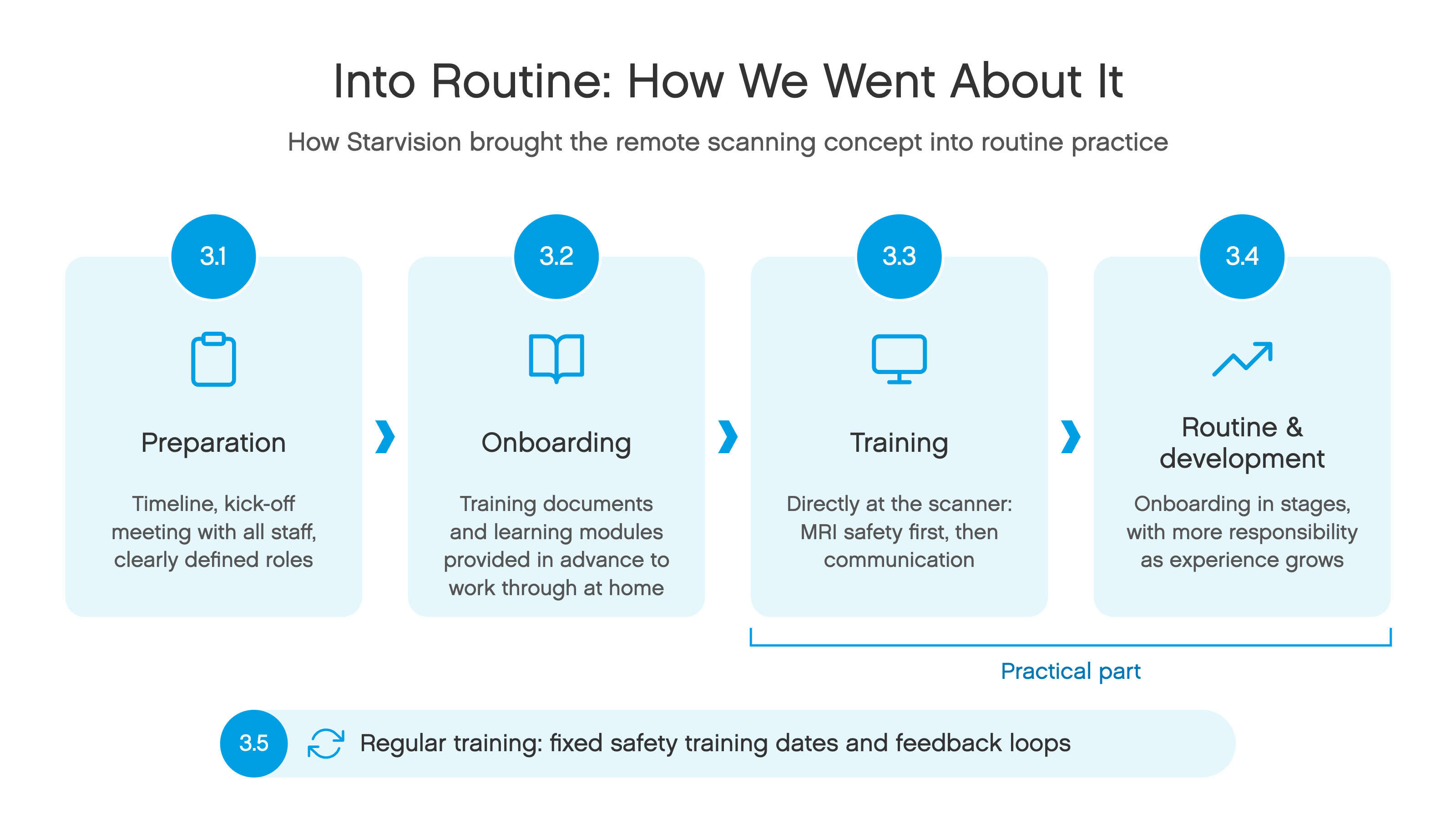
Figure 6: Four-step process for introducing remote scanning at Starvision, with ongoing regular training. Own illustration.
In this way, we have spread out onboarding as a whole. Not everything is expected in the first two weeks. Instead, we think carefully about which content can best be placed at which point in time and adapt this individually. The result is practical, flexible onboarding that transitions step by step into routine.
4. Conclusion
Of course, not everything went smoothly when we introduced remote scanning. As with any new concept, there were stumbling blocks, especially at the beginning. One of the biggest challenges was clearly acceptance within the team. Many staff members were sceptical at first: What does this mean for my job? Will I be replaced?
These concerns are understandable and completely normal. We learned that transparency is crucial right from the start. A well-prepared kick-off meeting, in which goals, roles and expectations are discussed openly, quickly takes the pressure off. As soon as it was clear that the new model brings support and relief rather than job cuts, the initial scepticism vanished.
Another challenge was the workload during the implementation phase. New workflows, additional training and running the practice in parallel all require capacity. It is important to share the load of such projects across several people and implement them step by step. Nobody has to onboard ten patient coordinators at once or switch five scanners to remote operation straight away. Small steps work better, and mistakes are simply part of the process at the beginning.
I always say: if you never do anything, you never do anything wrong, but you never make any progress either. That is exactly why you should not be discouraged if something does not go perfectly. It is about getting started, gaining experience and continuously improving.
Another key lesson for us was the value of standards. At first, the word is often associated with restriction or rigidity. In practice, however, we found that standardisation means safety, clarity and efficiency. It is nothing other than the definition of the best way of working that we have found together: our own benchmark.
And that is exactly the point: standards do not create routine in a negative sense, but enable everyone to work reliably, calmly and effectively. When the workflows are right, there is more room for what really matters: good teamwork, satisfied patients and a team that enjoys its work.