
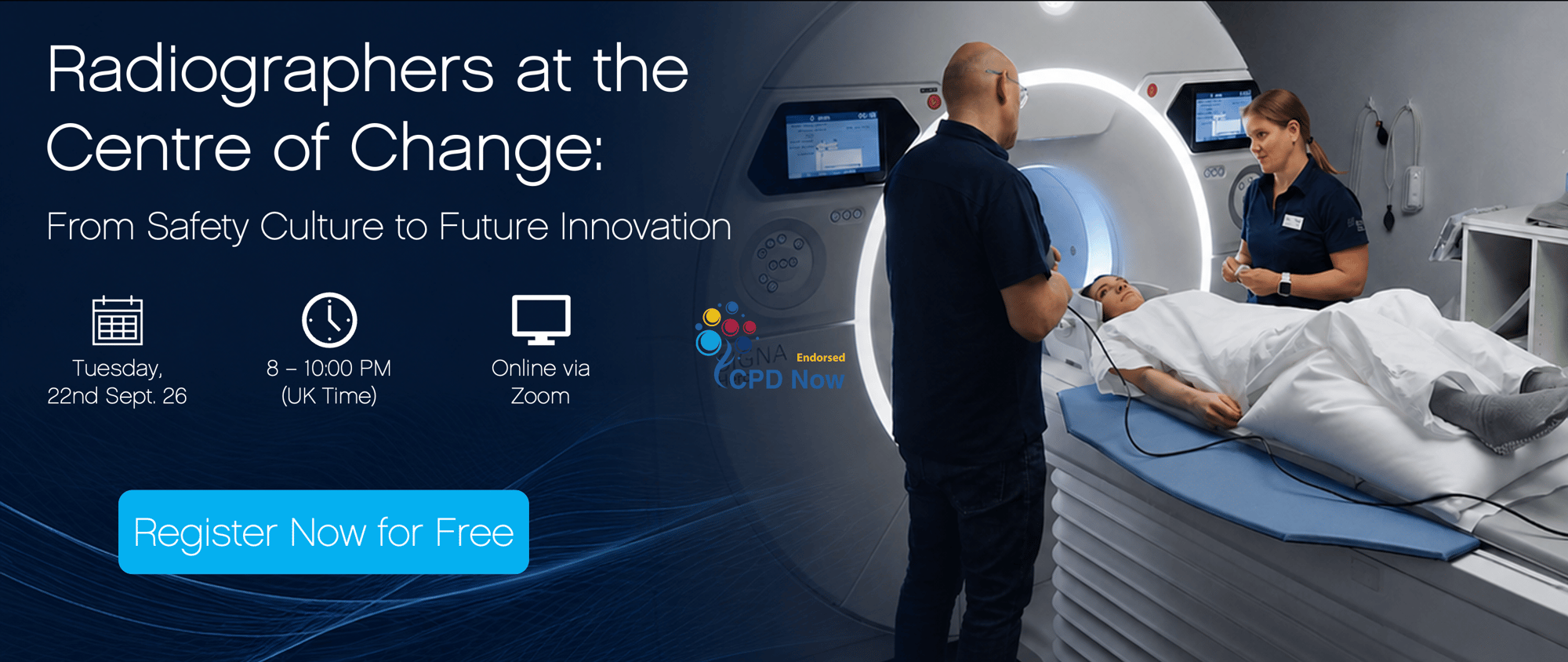
Medical imaging is constantly evolving, with increasing demands on services, emerging technologies and changing expectations for radiographers. However, meaningful improvements in patient care do not come from technology alone — they are driven by the people who implement, adapt and improve practice every day.
This webinar explores how radiographers can influence positive change through responsible AI adoption, strong safety cultures, effective teamwork and evidence-based approaches. From understanding the human factors behind safer MRI practice to embracing future innovations, this session highlights the essential role radiographers play in shaping the future of imaging services.
AI promises gains in efficiency, efficacy and safety in medical imaging, but these will only be realised through customised education, robust governance and transformational leadership. This presentation outlines why radiographers must take an active role in shaping AI adoption, while considering their confidence and readiness for AI leadership roles. The barriers and motivations influencing radiographers’ interest in these positions, and what expectations they hold for these roles will also be explored.
When we think of MR safety, our minds often go to magnetic fields, implants and projectile risks. Yet many safety incidents arise not from a lack of technical knowledge, but from failures in communication, decision-making and teamwork. This short talk will introduce some of the non-technical skills that underpin safe MRI practice, highlighting the importance of human factors, effective communication and a positive safety culture. Because while technical knowledge helps us identify hazards, it is non-technical skills that help prevent them from becoming incidents
RF skin heating and burns are the most highly reported MRI adverse events in several countries, however, these are easily prevented. With the rise of remote scanning, onsite safety and positioning is being increasingly delegated to non-radiographers and ensuring all MRI staff are fully educated is an important part of this new as well as existing culture. We'll be discussing how heating and burns can happen and how to improve culture to prevent future events.
A short session looking at how patient monitoring can support safer care in the MRI environment.
Darren is a Senior Lecturer in Medical Imaging with over 20years experience working within MRI across a range of settings. Most recently he was National Clinical Lead for an independent provider of diagnostics and therefore brings a wide range of experience in all aspects of clinical quality specific to imaging services. As well as supporting delivery of programmes within Medical Imaging, he also provides academic mentorship and supervision on the Doctorate in Clinical Research programme.
With extensive MRI experience across Australia and the UK in Private and Public/NHS Hospitals, Cassandra has seen a bit of everything! Now working as an MRI Modality Lead in Brisbane Australia. With a Masters in MRI from City, University of London and (almost finished) Masters of Healthcare Management and Leadership, she leads a dynamic team of highly skilled MRI Radiographers with passion and compassion. With a highly cited paper on MRI burns, she has a strong interest in MRI Safety education.
Gemma is a Cross-Sectional Specialist Radiographer within Spire Healthcare, and a Doctoral Researcher at Cit St George’s, University of London. Gemma’s PhD study focusses on exploring potential AI Leadership roles for radiographers. Gemma is an active member of the Society of Radiographers (SoR) AI Advisory Group, and a Young Club member within the European Society of Medical Imaging Informatics (EuSoMII).
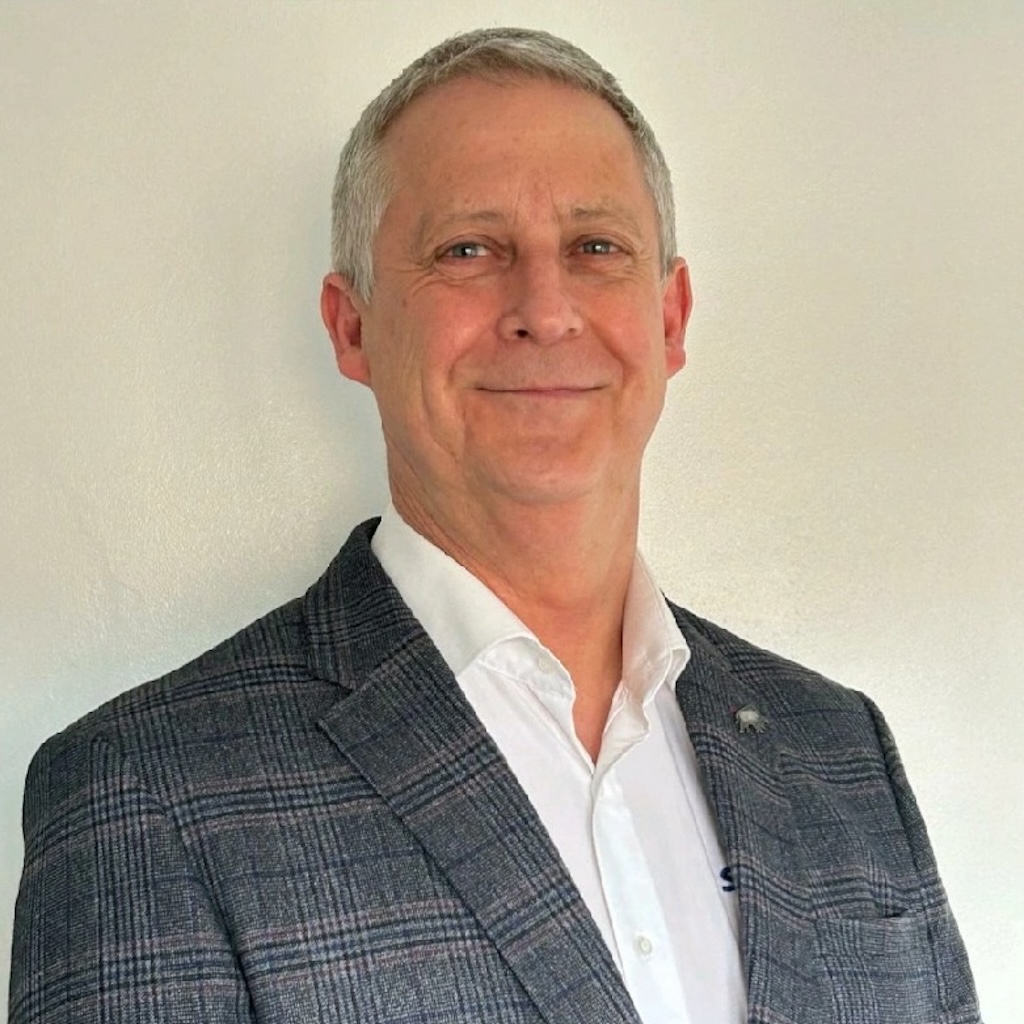
Tim brings over 30 years of experience in the medical imaging sector, with a background spanning medical engineering, clinical applications, technical service and diagnostic imaging sales. In his current role, he specialises in MRI patient monitoring solutions, working with imaging teams across the UK to support the integration of technology into safe and effective clinical practice
.png?width=122&height=71&name=SCoR_CPD_Logo_Endorsed_RGB_Large.%20(1).png)
This may help to support outcomes of CPD Now by College of Radiographers with the following supporting learning outcomes from the event:
[CoR 01] Practical skills
[CoR 02] Knowledge base
[CoR 03] Work safely
[CoR 05] Communication skills
[CoR 06] Manage knowledge/information
[CoR 08] Patient centred care and choice
[CoR 09] Inter-professional/agency working or learning
[CoR 10] Leadership/management skills
[CoR 11] Workforce development or staff governance
[CoR 19] Evidence to support practice
[CoR 21] Contribute published research evidence
[CoR 22] Further the profession
CPD for radiographers and other allied health professions regulated by the HCPC is learning outcomes based, rather than points/credits/hours accumulating.
Pearl Technology AG, based in Zurich, Switzerland, is the leading manufacturer of patient positioning devices in medical imaging. Our innovative solutions have been developed in close collaboration with our customers and experts, thus catering to the diverse demands of today’s radiology departments. The product range encompasses a broad variety of positioning aids setting new standards in terms of image quality, workflow efficiency, hygiene as well as patient experience.
At the heart of our innovation lies the patented Pearltec technology, developed in close partnership with the prestigious Zurich Federal Institute of Technology (ETH). It combines the functionality of inflatable air chambers with the flexibility of movable polystyrene beads that conform to the body's contours. This sophisticated design ensures pressure-free support and enhances image quality due to consistently minimizing unwanted movements. Furthermore, it is easy to use, perfectly hygienic and provides a high level of patient safety and comfort.
Learn more about Pearl Technology and our unique patient positioning solutions on www.pearl-technology.ch/en.